Unlocking Opportunities: A Comprehensive Overview to the L1 Visa Process
The L1 visa procedure provides an important path for international business looking for to transfer essential staff members across boundaries. Comprehending the subtleties of qualification criteria, the distinctions in between L-1A and L-1B visas, and the intricacies of the application process can considerably influence a candidate's success. Nevertheless, steering this complex landscape is not without its difficulties, and cautious interest to documents and employer sponsorship is necessary. As we explore the key elements of this procedure, the techniques for overcoming possible barriers will end up being noticeable, disclosing just how educated prep work can open up a world of chances.
Recognizing the L1 Visa
Understanding the L1 visa requires acknowledging its value as an essential tool for multinational firms seeking to move proficient staff members in between global workplaces. This non-immigrant visa classification helps with the activity of execs, managers, and specialized knowledge workers to the USA, thereby making it possible for organizations to maintain functional continuity and harness international skill effectively. The L1 visa is divided right into 2 key categories: L-1A for managers and execs, and L-1B for staff members possessing specialized knowledge.The L1 visa offers a vital duty in boosting a firm's one-upmanship in the international marketplace. By enabling business to move their crucial workers, organizations can guarantee that crucial jobs are managed by certified individuals who are already aware of the company's culture and functional processes. What Is L1 Visa. This inner transfer system not only fosters understanding sharing but likewise promotes innovation and collaboration across borders.Moreover, the L1 visa is usually favored for its fairly uncomplicated application procedure contrasted to various other visa groups, as it enables double intent, permitting holders to go after permanent residency while on a short-lived copyright. This attribute makes the L1 visa specifically appealing for both employers and employees, as it simplifies the pathway for proficient experts to develop lasting residency in the USA
Qualification Standards
Qualification for the L1 visa rests on several essential criteria that assure both the staff member and the employer meet details qualifications. This non-immigrant visa is developed for international firms to move staff members from international offices to united state counterparts.Firstly, the company needs to be a certifying company, which includes a parent business, branch, affiliate, or subsidiary of an U.S. company. The company needs to have been doing organization for at least one year both in the united state and abroad. This assures that the business has enough operational stability and a genuine presence.Secondly, the employee has to hold a managerial, executive, or specialized knowledge setting. For L1A visas, the candidate should show managerial or executive credentials, while L1B visas concentrate on specialized understanding pertaining to the company's products, services, or processes. In addition, the worker should have worked for the foreign entity for at least one continual year within the last 3 years before their application.Lastly, the staff member's duty in the united state need to align with their previous position, ensuring that their abilities and proficiency are leveraged for the company's benefit.
Kinds Of L1 Visas
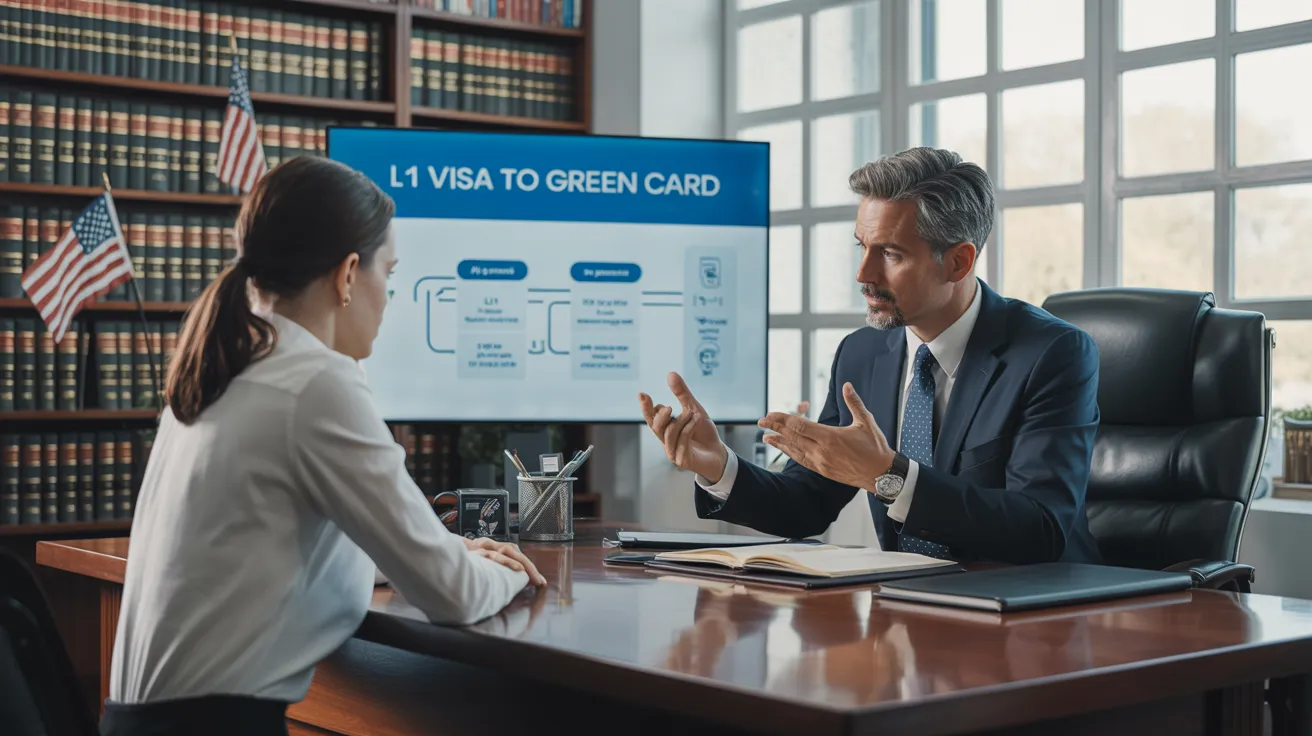
The L1 visa category comprises 2 key kinds created to facilitate the transfer of employees within international firms: the L1A visa for supervisors and execs, and the L1B visa for workers with specialized understanding. Each type offers distinct objectives and has specific eligibility criteria.The L1A visa is customized for individuals who hold supervisory or executive settings within a firm. This visa allows top-level employees to move to an U.S. branch, subsidiary, or affiliate of the exact same company. Candidates for the L1A visa need to show that they have been utilized in a supervisory or executive capability for at the very least one continuous year within the previous 3 years before their application. Furthermore, this visa offers a much longer period of keep, initially approved for three years, with the possibility of extensions for as much as seven years.In comparison, the L1B visa is meant for specialists with specialized understanding pertaining to the business's items, services, or procedures. To certify, candidates have to confirm that their expertise is critical to the company and that they have actually worked for at the very least one constant year within the last 3 years in a role that needed this specialized expertise. The L1B visa is at first given for 3 years, with extensions readily available for approximately 5 years.Both visa kinds are vital for firms looking for to enhance their global operations by leveraging proficient personnel, consequently advertising innovation and effectiveness within the U.S. market.
Application Process
Steering via the L1 copyright procedure entails several essential steps that should be thoroughly followed to guarantee a successful end result. The procedure starts with the U.S. company, who have to initially develop qualification by showing a certifying partnership with the foreign entity and confirming that the staff member satisfies the particular needs for the L1 visa classification being sought.Once eligibility is validated, the company starts the process by filing Kind I-129, the Petition for a Nonimmigrant Employee, with the U.S. Citizenship and Immigration Solutions (USCIS) This type should be come with by an in-depth summary of the work duties to be done, the organizational framework of both the united state and international entities, and the employee's certifications. It's important to verify that all info is exact and full, as noninclusions or inaccuracies can result in hold-ups or denials.Upon authorization of the I-129 request, the following step includes the employee looking for the L1 visa at a united state consular office or consular office in their home country. This phase needs the completion of Form DS-160, the Online Nonimmigrant copyright, and scheduling an interview. During the meeting, the candidate has to provide evidence sustaining their credentials and the employer's petition.After the visa is given, the employee can enter the USA to operate in the designated duty. In general, careful prep work and adherence to every step of the application procedure are essential for a successful L1 visa end result.
Required Documents

Important Kinds Needed
Steering the L1 Visa procedure needs careful attention to the important forms and paperwork essential for a successful application. The key kind required is the Kind I-129, Request for a Nonimmigrant Worker, which should be finished and submitted by the united state company (L1 Visa Requirements). This type describes the details of the work offer and the certifications of the staff member looking for the L1 Visa.Alongside Kind I-129, the applicant will need to total Kind I-539 if coming with member of the family are likewise making an application for visas. Furthermore, the company should supply proof of the qualifying relationship in between the united state entity and the foreign entity, frequently demanding the entry of business files such as articles of unification or financial statements.Moreover, it is important to consist of the L Category Supplement to Form I-129, which specifies the kind of L Visa being requested-- either L-1A for supervisors and execs or L-1B for workers with specialized understanding. Finally, candidates must ensure that all types are authorized and dated appropriately, as incomplete submissions can cause hold-ups or rejections. Properly putting together these vital forms lays the foundation for a smoother L1 copyright procedure
Sustaining Evidence Demands
Supporting documents is important for an effective L1 copyright, as it corroborates the insurance claims made in the request. Applicants have to give an array of papers to demonstrate eligibility for the visa, which is categorized into 2 primary types: evidence of the qualifying partnership between the U.S. and international entities and evidence of the applicant's qualifications.To establish the connection, candidates should send paperwork such as corporate organizational charts, monetary declarations, and proof of possession. These papers validate that the foreign company has a qualifying connection with the united state company, whether as a moms and dad firm, subsidiary, branch, or affiliate.For the candidate's qualifications, necessary papers consist of a thorough work letter from the international employer, laying out the candidate's task title, duties, and duration of work. In addition, academic credentials, such as degrees and diplomas, must be given to verify the applicant's knowledge in the relevant area.
Employer Sponsorship Documents
Company sponsorship records play an important role in the L1 copyright procedure, as they verify the U.S. employer's dedication to the candidate's employment in the United States. These papers are important for demonstrating the company's qualification to sponsor the applicant for the L1 Visa.Key papers generally called for include a detailed employment letter from the U.S. employer, which describes the job title, responsibilities, and the nature of the employment connection. Additionally, the company has to give evidence of the firm's legitimacy, such as service licenses, income tax return, and organizational graphes, highlighting the connection between the U.S. entity and the international company.Furthermore, evidence of the worker's qualifying relationship with the foreign company is necessary. This may include documentation evidencing the staff member's duty in the international entity, such as L1 Visa pay stubs, work contracts, or performance analyses.
Common Difficulties
Steering the L1 visa procedure provides a number of common obstacles that applicants must be aware of (L1 Visa Qualifications). Trick issues frequently include rigid documents requirements, potential delays in handling times, and the necessity for stringent legal conformity. Recognizing these barriers can assist candidates better prepare and mitigate threats during their copyright trip
Paperwork Demands
The L1 copyright procedure frequently provides significant difficulties connected to documentation needs. Applicants need to supply substantial documents to develop eligibility, which can result in confusion and potential delays. Secret papers include proof of a qualifying partnership in between the united state and foreign company, evidence of the candidate's employment background, and comprehensive details about the task function in the U.S.One typical challenge is collecting sufficient proof to show the nature of the certifying partnership. Business often struggle to present clear organizational charts or monetary statements that illustrate the connection between the entities. On top of that, making sure that letters of support from companies precisely show the candidate's work duties and qualifications is important, as unclear summaries can cause denials.Another problem occurs from the need for thorough job summaries that line up with the L1 visa categories. Candidates need to articulate not only their current role however also their supervisory or specific expertise duties clearly. This requires a thorough understanding of both the candidate's position and the regulative language used in L1 applications.
Handling Dead Time
Experiencing hold-ups in processing times is a typical challenge dealt with by L1 visa candidates, often causing stress and unpredictability. Several variables add to these delays, consisting of high application volumes, increased analysis of applications, and management stockpiles within the U.S. Citizenship and Immigration Provider (USCIS) Applicants may find that processing times can differ considerably depending on the solution facility managing their application, as each facility has its own workload and performance degrees. Additionally, the intricacy of the applicant's case, such as the requirement for extensive documents or explanation, can better extend wait times.In some circumstances, problems associated with the candidate's current migration status or previous visa history may likewise cause added delays, as USCIS might call for further testimonial or information. It is vital for candidates to continue to be aggressive throughout this period, maintaining open communication with their employers and lawful agents to deal with any kind of potential worries promptly.Understanding these processing time difficulties can aid L1 visa candidates prepare for feasible hold-ups and alleviate the effect on their change and job strategies. Patience and diligence are crucial virtues in steering this elaborate process.
Lawful Conformity Issues
Several L1 visa applicants come across legal compliance problems that can complicate their journey toward getting the visa. Comprehending and adhering to the certain regulations set by the U.S. Citizenship and Migration Solutions (USCIS) is crucial. Usual challenges consist of demonstrating the qualifying relationship between the international and U.S. companies, along with showing that the candidate has the requisite customized knowledge or managerial capacity.Additionally, applicants should supply complete paperwork outlining their task tasks, corporate framework, and financial practicality of the U.S. entity. Poor or imprecise paperwork can bring about delays or perhaps denials. Employers must also assure that they abide by labor regulations, including wage and working condition requirements, which can affect visa eligibility.Another common issue involves preserving compliance with the terms of the visa once given. Changes in employment status, job obligations, or company framework can necessitate changes to the visa, which if not dealt with quickly can cause lawful problems. As an outcome, staying informed about conformity needs and looking for lawful advise when needed is vital to navigate the complexities of the L1 visa process effectively.
Tips for Success
Success in the L1 copyright procedure frequently depends upon thorough preparation and attention to detail. To improve your possibilities of authorization, start by completely understanding the eligibility needs for both the L1A and L1B visa categories. Assess whether your setting at the company certifies as managerial, executive, or specialized knowledge, as this classification especially influences your application.Next, collect extensive paperwork that confirms your insurance claims. This includes business graphes, thorough task summaries, and evidence of the company's operational structure. Clear and succinct proof of the qualifying partnership in between the united state entity and the international entity is crucial. Verify that all files are organized realistically and provided in a professional fashion, as this reflects your commitment and severity regarding the application.Engage the services of a skilled migration lawyer that concentrates on L1 visas. Their proficiency can verify vital, guiding you via complex laws and assuring that all documentation abides by existing legislations. In addition, prepare for the interview by practicing solution to common questions and being ready to discuss your role and contributions to the firm in depth.
Regularly Asked Inquiries
Can Household Members Come With the L1 Visa Owner?
Yes, household members of L1 visa holders, including spouses and single kids under 21, can go along with the primary visa holder. They might also request L2 visas, which allow them to live in the USA.
The Length Of Time Can I Remain On an L1 Visa?
The L1 visa allows preliminary stays of approximately three years, with the possibility of extension. L1A visa owners may stay for an optimum of 7 years, while L1B visa owners can stay for 5 years.
Can L1 Visa Holders Look For an Environment-friendly Card?
Yes, L1 visa owners can look for a permit. They might go after irreversible residency with employment-based categories, usually calling for sponsorship from their company, supplied they fulfill the necessary certifications and documentation needs.
What Occurs if My L1 copyright Is Denied?
If your L1 copyright is denied, you might obtain a notification describing the reasons for denial. You can look for to appeal the decision, reapply, or check out alternate visa choices based on your scenarios.
Exist Any Kind Of Traveling Restrictions With an L1 Visa?
An L1 visa normally permits worldwide traveling; nonetheless, re-entry to the U.S. L1 Visa Requirements. rests upon maintaining legitimate status. Vacationers need to guarantee compliance with visa conditions to prevent problems upon return
Conclusion
Comments on “L1 Visa for Investors”